
Michael Fayard was absolutely Amazing as my counsel!!! I can’t speak enough on the high regard I hold him. He got the outcome that I was hoping but had a...
- Blake Pavey







At the law firm of Michael Fayard, Attorney at Law, we help clients throughout Sarasota, Manatee, and DeSoto counties sort out what belongs to the marriage and what belongs to them, then work toward a fair resolution to their divorce.
Call or book an online appointment today to talk with an experienced family law attorney about your property.
Florida is an equitable distribution state, not a community property state. Under Fla. Stat. 61.075, courts start from the idea that marital assets and liabilities should be divided equally, but that starting point can shift once a judge weighs the circumstances of your marriage.
Equitable does not always mean equal. A court may divide property unevenly if the facts support it, so understanding how property division actually works matters as much as knowing what you own.
Whether your case is contested or resolved through divorce mediation, the same underlying rules apply. We help clients understand those rules early, before negotiations begin, so property division does not feel like a mystery.
Before anything can be divided, it has to be classified. This step decides which assets are even on the table, and it is often where the most disagreement happens.
Marital property generally includes assets and debts either spouse acquired during the marriage, regardless of whose name is on the title. This can include the marital home, vehicles purchased during the marriage, joint bank accounts, credit card debt run up during the marriage, and the portion of retirement benefits earned while married.
Income earned during the marriage, and anything purchased with that income, is usually treated as marital property even if only one spouse worked outside the home. A retirement account opened before the wedding can still contain a marital portion if contributions continued after the marriage began.
Separate property generally includes assets owned before the marriage, along with gifts and inheritances received by only one spouse, as long as they were kept apart from marital funds. Some prenuptial or postnuptial agreements also spell out in advance what stays separate, which can simplify this step considerably.
Separate property can lose its protected status if it gets mixed with marital funds, a concept often called commingling. A spouse who deposits an inheritance into a joint account, or uses inherited funds to renovate the marital home, may find that money treated as marital property once the case reaches court. We help clients trace and document separate assets with bank records, closing statements, and gift letters so they are not absorbed into the marital estate by mistake.
Once a court knows what is marital, it looks at several factors to decide how to divide it. Under Fla. Stat. 61.075, these can include:
No single factor controls the outcome. Courts weigh all of them together, which is one reason two divorces with similar assets can end in different results. This is also why an early, honest conversation with an attorney about your specific facts matters more than general assumptions about how property gets split.
Some property is straightforward to divide, like a car or a savings account. Other assets take considerably more work to value and separate fairly, and mistakes here can be expensive.
Retirement benefits earned during the marriage, including pensions, 401(k) accounts, and similar plans, are generally treated as marital assets subject to division under Fla. Stat. 61.076. Dividing these accounts often requires a separate court order, sometimes called a qualified domestic relations order, to transfer funds without triggering early withdrawal penalties. The portion earned before the marriage may need to be identified and excluded from division.
A business started or grown during the marriage can be one of the most contested assets in a divorce, and business owners often have unique concerns about high-asset divorce issues like protecting operations while the case is pending. Courts may need a valuation expert to determine what the business is worth and how much of that value is marital versus attributable to a spouse’s separate, pre-marriage effort. We regularly work with forensic accountants and valuation professionals so the numbers used in negotiation or at trial hold up.
The marital home carries financial weight and emotional weight. Some couples sell the home and split the proceeds, others agree that one spouse keeps the home and buys out the other’s share, often by refinancing the mortgage, and some arrangements delay a sale until children reach a certain age. What fits your situation depends on your finances, your mortgage terms, and your priorities for your family.
Florida requires both spouses to exchange financial information early in the case through mandatory disclosure. This generally includes income, expenses, assets, and debts, and it creates the factual record the rest of the case is built on. If one spouse’s disclosure looks incomplete, discovery tools such as document requests or depositions can help fill in the picture before property division is finalized.
From there, many property questions get resolved through negotiation or mediation rather than a trial. Sarasota County frequently refers contested family law cases to mediation, which can give you more control over the outcome than waiting for a judge to decide, and it can also keep costs down compared to litigating every issue. When an agreement is not possible, the case proceeds toward a hearing where the court applies the factors above to reach a final division.
Valuation timing matters too. Assets are typically valued as close to trial or settlement as practical, since values for things like retirement accounts, businesses, and real estate can shift over the course of a case. Waiting too long, or valuing an asset too early, can distort the final property division outcome in either spouse’s favor.
We review your financial history to help identify what should be protected as separate property and what belongs to the marital estate, including assets that have become mixed together over time or that came from a prenuptial agreement neither spouse fully remembers.
For businesses, retirement accounts, and other complex holdings, we bring in the right professionals to establish accurate values, so decisions about property division are based on real numbers rather than guesswork.
Some property disputes settle at the negotiating table. Others need to go in front of a judge. We prepare every property division case as though it may go to trial, which puts you in a stronger position either way, whether you end up settling or not.
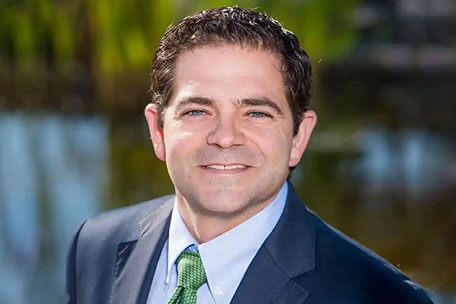
Talk to a Sarasota Divorce Lawyer Today
Florida starts from an equal-division framework, but a judge can adjust that split based on the factors above. The result may or may not end up exactly even, depending on your circumstances.
Marital misconduct is not typically a direct factor in dividing property, though financial misconduct, such as one spouse dissipating marital assets, can affect the outcome.
The marital home can be sold with proceeds split, awarded to one spouse with a buyout, or, in some cases involving children, kept temporarily under a delayed-sale arrangement. The right option depends on your finances and goals.
Often yes, as long as it was kept apart from marital funds. If it was deposited into a joint account or used for shared expenses, it may be harder to protect, which is why documentation matters.
Not necessarily. Many business owners keep the business and offset its value with other marital assets instead of selling. A valuation is usually the first step in exploring that option.
There is no charge for your initial consult and no pressure to hire. Talk to Michael about your property, your finances, and what a fair resolution could look like for your family.
Michael Fayard was absolutely Amazing as my counsel!!! I can’t speak enough on the high regard I hold him. He got the outcome that I was hoping but had a...
- Blake Pavey
After an accident, my daughter and I came to see Michael Fayard (Michael Fayard, Attorney at Law) with many questions, and misperceptions about what was customary, fair and frankly what...
- Jeffrey Moyer
Michael Fayard being a fellow veteran and a outstanding lawyer. He helped me out when I was in a hard place and did a exemplary job. I absolutely would recommend...
- John Harden
Michael has been handling my case for almost 2 months now he has opened his mind and heart in the matter and he honestly saved my life by just alone...
- D.F.
He was able to handle my case and throughout the whole thing keep me informed so I never felt left out of the loop. After everything was fix and settled,...
- Justin
Michael was fast, efficient and to the point. I really appreciated Michael's no nonsense approach to my issue. Thank you Michael and I look forward to doing future business with...
- Thomas
I have consulted with Mr. Fayard on several occasions and have found him to be very helpful and the ultimate professional. I highly recommend him. - Joe Palermo, President/Palermo Design...
- Joe Palermo
Michael is very knowledgeable about his areas of practice. He has been able to help me on a couple of occasions with some personal legal advice. Great guy to work...
- Lamar Brantley
Thorough, persistent, & resolute is the way I would describe Michael Fayard, Attorney at Law. Michael is by far the most understanding attorney I have ever dealt with. I would...
- Matt Owen
Called Michael and he returned my call in under five minutes. I was never in this situation before and I let my fears get the best of me. When Michael...
- J.S.
Very responsive! Great work! - Jay Magnutech
- Jay Magnutech
Simply professional! - Richie Allen
- Richie Allen
The consummate professional Michael and his team really because your advocate. We would trust anyone else with our legal needs. We have used Michael for many years, and we know...
- Earl Kelly
Michael is great. He is always responsive, practical and is a straight shooter. Would recommend to anyone. - Bryce Woodyard
- Bryce Woodyard
Great job. Definitely will use them again if the need arises. - Bill Winkler
- Bill Winkler
Mr. Fayard was amazing!!! Handled our issue quickly and with ease. I would recommend him to everyone! Honest, reliable, courteous, kind, caring of our needs and just a fantastic experience!!...
- Julie Hardie
We have used Michael for personal matters and business matters. He has always handled things quickly and professionally. If we ever need an attorney again, we will definitely call him....
- Maxine Lewis
After an accident, my daughter and I came to see Michael Fayard (Michael Fayard, Attorney at Law) with many questions, and misperceptions about what was customary, fair and frankly what...
- Jeffrey Moyer
Michael Fayard helped us navigate an issue with leasing heavy equipment. Thanks to Mr. Fayard our issue was resolved smoothly. We would recommend him to anyone needing a diligent, hardworking...
- Sosa Sod
I find that Michael was very understanding and knowledgeable. He did not promise anything and handled the case well. ..The case also ended well. Thank you! I'm pleased to know...
- Michelle S
I worked closely with Mike over a 1-year period and am impressed with not only with his legal skills, but his strong character. He is the type of lawyer I...
- Mark Simonds
Contact Us Today
Whether you’re dealing with paternity, divorce, child support modifications, or another family law matter, you should have a knowledgeable lawyer. Working with a Sarasota family lawyer will help you get the best possible results for you and your children.
Call (941) 306-1310"*" indicates required fields
