
Michael Fayard was absolutely Amazing as my counsel!!! I can’t speak enough on the high regard I hold him. He got the outcome that I was hoping but had a...
- Blake Pavey

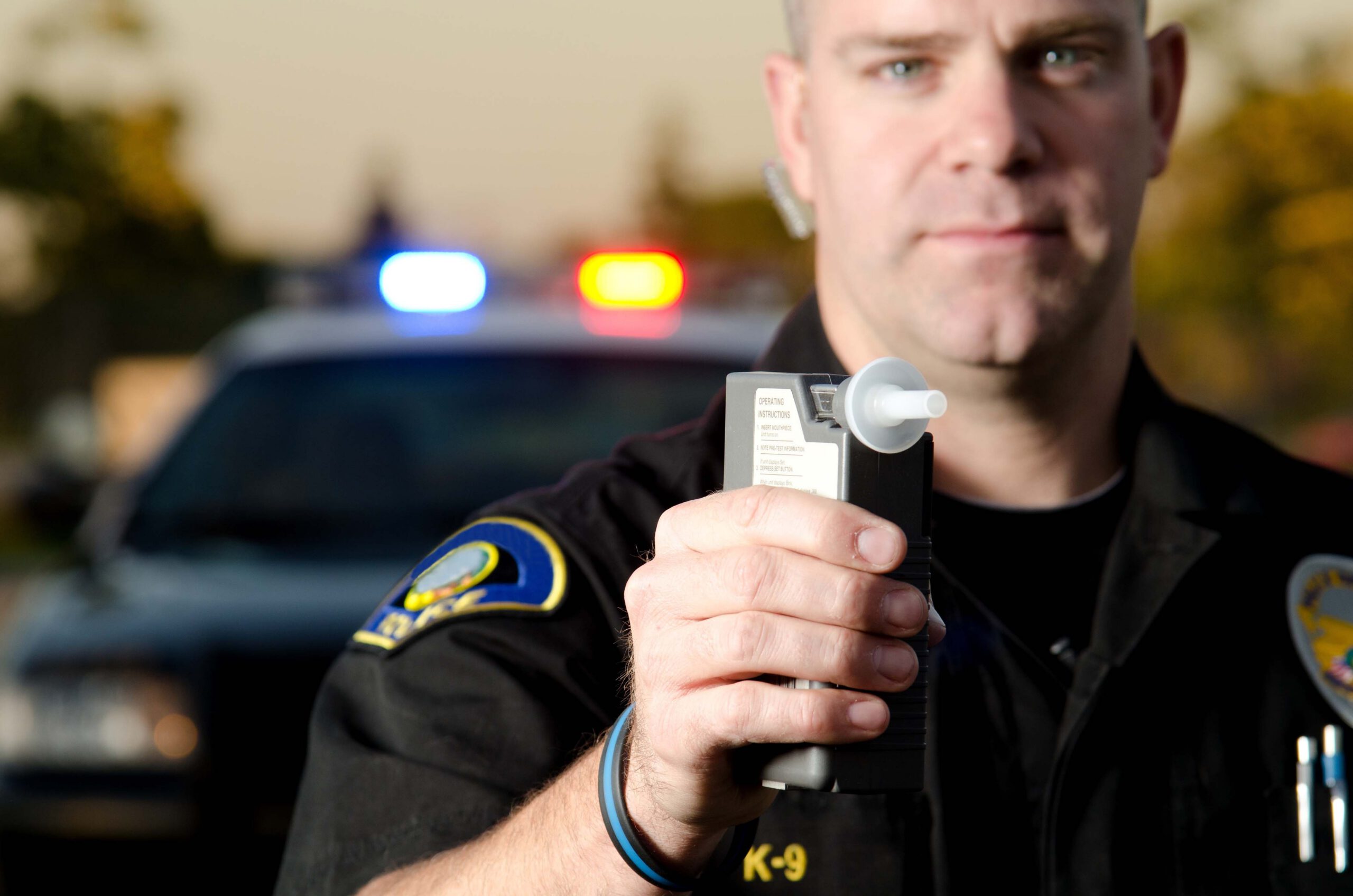





A driving under the influence (DUI) charge in Florida can have consequences that extend far beyond the initial arrest. A conviction may affect your driver’s license, finances, employment opportunities, and criminal record. Even a first-time offense can carry fines, probation, and possible jail time.
However, an arrest does not automatically mean you will be convicted. The prosecution must prove the elements of the offense, and the evidence collected during the traffic stop, field sobriety exercises, and chemical testing may be subject to legal challenges.
If you have been charged with DUI, a Florida DUI defense attorney can review the circumstances of your arrest, identify potential weaknesses in the prosecution’s case, and explain your legal options. Michael Fayard represents individuals facing criminal charges and can help you understand how to approach a DUI case.
Florida DUI cases may involve several types of evidence, including an officer’s observations, driving behavior, field sobriety exercises, breath or blood test results, and statements made during the investigation. The appropriate defense depends on the facts of the case and whether the prosecution can establish the required elements of the offense.
Under Florida Statute § 316.193, a person may be guilty of DUI if they drive or are in actual physical control of a vehicle while their normal faculties are impaired by alcohol or certain substances, or if their blood or breath alcohol level meets or exceeds the legal limit of 0.08.
A defense attorney can examine how the investigation began, whether law enforcement followed applicable procedures, and whether the evidence reliably supports the allegations. Potential defense strategies include challenging the legality of the traffic stop, examining the administration of field sobriety exercises, questioning chemical test results, and identifying problems with the evidence.
Police officers cannot stop a vehicle for any reason they choose. Generally, an officer must have reasonable suspicion of a traffic violation or other unlawful activity to justify an investigative traffic stop. The specific circumstances determine whether the stop was legally justified.
For example, an officer may observe a driver speeding, running a red light, or failing to maintain a lane. However, if the officer cannot establish a legally sufficient basis for the stop, a defense attorney may be able to challenge the resulting evidence.
The legality of a stop depends on the facts available to the officer at the time. An attorney can review dashcam footage, body camera recordings, police reports, and witness statements to determine whether the stop complied with constitutional requirements.
If a court finds that a stop was unlawful, certain evidence obtained as a result may be suppressed. Suppression does not automatically dismiss every DUI case, but it may significantly affect the prosecution’s ability to prove its allegations.
Miranda warnings protect certain constitutional rights during custodial interrogation. If law enforcement conducts a custodial interrogation without providing the required warnings, statements obtained during that interrogation may be excluded from evidence.
However, a failure to read Miranda rights does not automatically invalidate a DUI arrest or require the entire case to be dismissed. Miranda generally applies to custodial interrogation, not every interaction between a driver and a police officer.
A defense attorney can evaluate when the questioning occurred, whether you were in custody, what questions were asked, and whether your statements may be admissible in court. If the circumstances support a Miranda challenge, excluding particular statements may limit the evidence available to the prosecution.
Breath, blood, and other chemical test results can play an important role in a DUI prosecution. However, the reliability and admissibility of those results depend on the circumstances surrounding the collection, handling, and analysis of the samples.
Florida regulates evidentiary alcohol testing through laws and administrative rules governing approved methods, testing instruments, operators, and procedures. The Florida Department of Law Enforcement’s Alcohol Testing Program oversees important aspects of breath and blood alcohol testing.
A defense attorney may examine whether:
A procedural error does not automatically make a test result inadmissible. Its significance depends on the nature of the error and the applicable legal standards. When a valid challenge exists, however, it may be possible to exclude or question chemical evidence that the prosecution relies on.
During a DUI investigation, an officer may ask a driver to perform field sobriety exercises, such as walking heel-to-toe, standing on one leg, or following a moving object with their eyes. Officers use observations from these exercises to help assess possible impairment.
Performance on these exercises can be affected by factors other than alcohol consumption. Balance problems, injuries, medical conditions, fatigue, footwear, uneven surfaces, lighting, and difficulty understanding instructions may all be relevant to interpreting the results.
An attorney can review how the exercises were administered, whether the instructions were clear, and whether the officer’s conclusions are supported by the available evidence. Video footage may also help establish whether the officer’s report accurately describes the driver’s performance.
Poor performance does not automatically establish that a driver was legally impaired. Likewise, a driver does not necessarily defeat a DUI charge by performing well on the exercises. The results must be considered alongside the other evidence in the case.
The prosecution must prove the elements of the charged DUI offense beyond a reasonable doubt. Evidence that a driver consumed alcohol is not necessarily enough, by itself, to establish that the driver was impaired while operating a vehicle.
A defense attorney may examine the officer’s observations, driving behavior, statements, test results, and the timeline of events. Inconsistencies between the evidence and the allegations may raise questions about whether the prosecution can meet its burden of proof.
For example, video footage may contradict an officer’s description of a driver’s behavior, or the evidence may leave questions about when alcohol was consumed in relation to driving and testing. Whether these facts provide a viable defense depends on the complete record and the applicable law.
A DUI investigation may generate several types of evidence, including body camera footage, dashcam recordings, witness statements, dispatch records, test results, and written reports. Reviewing the evidence as a whole can reveal inconsistencies or procedural issues that are not apparent from the arrest report alone.
A defense attorney can determine whether evidence was obtained lawfully, whether the prosecution has disclosed relevant materials, and whether there are grounds to challenge the admission or reliability of particular evidence.
The goal is to identify legitimate legal and factual issues that may affect the case, rather than assume that any single error will result in dismissal.
A breath or blood alcohol concentration (BAC) of 0.08 or higher can provide significant evidence in a Florida DUI case. However, the test result does not eliminate every possible defense.
The validity and admissibility of the result may depend on the testing procedures, the instrument or laboratory analysis, and the circumstances surrounding the sample. Questions may also arise about whether the evidence reliably establishes the driver’s alcohol concentration at the relevant time.
A test result below 0.08 does not automatically prevent a DUI conviction, either. Florida law allows a DUI charge based on impairment of normal faculties, even when the measured alcohol concentration is below the legal limit.
The best way to assess a case involving a high or low BAC is to review the complete evidence, including the test records, officer observations, and timeline of the investigation.
Refusing a breath test does not automatically mean that you will be convicted or that the DUI charge will be dismissed. The consequences of a refusal depend on the circumstances, your prior history, and the laws that apply to the incident.
Florida’s implied consent law addresses chemical testing and the consequences of refusing certain lawful tests. A refusal may lead to driver’s license consequences and may be introduced as evidence in a criminal proceeding. Prior refusals can carry additional consequences under applicable law.
Even without a breath test result, the prosecution may rely on other evidence, such as driving behavior, officer observations, field sobriety exercises, video footage, or witness testimony.
An attorney can review whether the test request and related procedures complied with the law, explain the potential consequences of the refusal, and assess the remaining evidence. Refusal should not be treated as a guaranteed defense strategy.
A DUI arrest can create two separate legal issues: the criminal case and the administrative status of your driver’s license. These processes are related, but they are not the same.
Depending on the circumstances, the Florida Department of Highway Safety and Motor Vehicles may impose an administrative suspension based on a qualifying breath or blood test result or a refusal to submit to testing. A criminal case may continue separately, and its outcome does not necessarily resolve every administrative license issue.
Strict deadlines may apply to challenging an administrative suspension or seeking review. If you have recently been arrested for DUI, promptly confirm the deadlines and options that apply to your case with a qualified attorney and the appropriate licensing authority.
Addressing the license issue early can help you understand whether you may be eligible to challenge the suspension or pursue a restricted driving privilege under the applicable requirements.
The consequences of a DUI conviction depend on factors such as prior convictions, the driver’s alcohol concentration, whether a minor was in the vehicle, and whether the incident caused property damage, serious bodily injury, or death.
For a standard first DUI conviction, Florida law generally provides for a fine of $500 to $1,000 and up to six months in jail. Enhanced penalties may apply in certain circumstances, including when the BAC is 0.15 or higher or a person under 18 was in the vehicle. Other consequences can include probation, community service, vehicle immobilization, license revocation, and an ignition interlock device when required.
Repeat offenses and DUI cases involving injuries or fatalities can carry substantially more serious penalties, including felony charges and lengthy incarceration.
A conviction may also affect insurance costs, employment, professional opportunities, and future background checks. The specific consequences depend on the charge, the facts, and your criminal history.
The steps you take after an arrest can affect your ability to evaluate and respond to the charge. Consider the following:
Preserve any paperwork provided at the time of your arrest, including citations, release documents, notices relating to your driver’s license, and information about upcoming court dates. Keep relevant receipts, messages, photographs, and other records that may help establish the timeline of events.
Be careful about discussing the incident on social media or in messages. Statements and communications may become relevant to the case. Speak with your attorney about how to handle questions from law enforcement and requests for information.
Do not ignore court dates, release conditions, or notices concerning your driving privileges. Criminal proceedings and administrative license matters may have different requirements and deadlines.
An attorney can review the allegations, explain the process, and identify issues that may require investigation. Early review may help preserve relevant evidence, assess potential challenges, and clarify the options available to you.
Facing a DUI charge can be stressful, particularly when you are unsure how the arrest may affect your license, record, or future. Understanding the evidence and the applicable law is an important part of deciding how to proceed.
Michael Fayard can help you evaluate the allegations and understand the legal issues involved in your case. Depending on the circumstances, that may include reviewing the traffic stop, examining chemical test records, assessing field sobriety exercises, and identifying potential challenges to the prosecution’s evidence.
No two DUI cases involve exactly the same facts. A careful review can help identify which defenses are legally supportable and whether negotiations, pretrial motions, or trial may be appropriate.
Talk to a Sarasota Divorce Lawyer Today
Yes, a DUI charge may be dismissed when legally sufficient grounds exist, such as a successful challenge to critical evidence or a failure by the prosecution to establish the elements of the offense. However, dismissal is not guaranteed, and the available options depend on the facts and evidence in the case.
There is no single defense that works in every DUI case. Potential defenses may involve an unlawful traffic stop, unreliable chemical testing, improperly administered field sobriety exercises, inadmissible statements, or insufficient evidence of impairment. An attorney can evaluate the facts to determine which arguments may apply.
Depending on the evidence and circumstances, a DUI case may resolve through a negotiated plea to a lesser charge. Whether that option is available depends on the facts, the strength of the evidence, the applicable law, and the prosecutor’s position. A reduction is not guaranteed.
Failing a field sobriety exercise does not automatically establish guilt. The results may be challenged based on how the exercises were administered, the conditions in which they occurred, or factors that affected your performance. The prosecution must still prove the elements of the charged offense beyond a reasonable doubt.
A breath test refusal does not automatically result in dismissal of a DUI charge. Florida law provides for potential license consequences and allows certain refusals to be considered as evidence in a criminal proceeding. The legality of the test request and the other evidence in the case may still be relevant to your defense.
A DUI conviction can have long-term consequences. Florida generally does not allow a DUI conviction to be sealed or expunged, and DUI convictions are subject to specific rules concerning how prior offenses are considered. The outcome of the case matters, so discuss your record and any available relief with an attorney.
A first-time DUI can still result in fines, probation, license consequences, and possible jail time. An attorney can review the evidence, explain the potential penalties, and identify whether any legal or factual issues may support a defense. Getting legal advice early can also help you understand the separate administrative issues affecting your driver’s license.
Michael Fayard was absolutely Amazing as my counsel!!! I can’t speak enough on the high regard I hold him. He got the outcome that I was hoping but had a...
- Blake Pavey
After an accident, my daughter and I came to see Michael Fayard (Michael Fayard, Attorney at Law) with many questions, and misperceptions about what was customary, fair and frankly what...
- Jeffrey Moyer
Michael Fayard being a fellow veteran and a outstanding lawyer. He helped me out when I was in a hard place and did a exemplary job. I absolutely would recommend...
- John Harden
Michael has been handling my case for almost 2 months now he has opened his mind and heart in the matter and he honestly saved my life by just alone...
- D.F.
He was able to handle my case and throughout the whole thing keep me informed so I never felt left out of the loop. After everything was fix and settled,...
- Justin
Michael was fast, efficient and to the point. I really appreciated Michael's no nonsense approach to my issue. Thank you Michael and I look forward to doing future business with...
- Thomas
I have consulted with Mr. Fayard on several occasions and have found him to be very helpful and the ultimate professional. I highly recommend him. - Joe Palermo, President/Palermo Design...
- Joe Palermo
Michael is very knowledgeable about his areas of practice. He has been able to help me on a couple of occasions with some personal legal advice. Great guy to work...
- Lamar Brantley
Thorough, persistent, & resolute is the way I would describe Michael Fayard, Attorney at Law. Michael is by far the most understanding attorney I have ever dealt with. I would...
- Matt Owen
Called Michael and he returned my call in under five minutes. I was never in this situation before and I let my fears get the best of me. When Michael...
- J.S.
Very responsive! Great work! - Jay Magnutech
- Jay Magnutech
Simply professional! - Richie Allen
- Richie Allen
The consummate professional Michael and his team really because your advocate. We would trust anyone else with our legal needs. We have used Michael for many years, and we know...
- Earl Kelly
Michael is great. He is always responsive, practical and is a straight shooter. Would recommend to anyone. - Bryce Woodyard
- Bryce Woodyard
Great job. Definitely will use them again if the need arises. - Bill Winkler
- Bill Winkler
Mr. Fayard was amazing!!! Handled our issue quickly and with ease. I would recommend him to everyone! Honest, reliable, courteous, kind, caring of our needs and just a fantastic experience!!...
- Julie Hardie
We have used Michael for personal matters and business matters. He has always handled things quickly and professionally. If we ever need an attorney again, we will definitely call him....
- Maxine Lewis
After an accident, my daughter and I came to see Michael Fayard (Michael Fayard, Attorney at Law) with many questions, and misperceptions about what was customary, fair and frankly what...
- Jeffrey Moyer
Michael Fayard helped us navigate an issue with leasing heavy equipment. Thanks to Mr. Fayard our issue was resolved smoothly. We would recommend him to anyone needing a diligent, hardworking...
- Sosa Sod
I find that Michael was very understanding and knowledgeable. He did not promise anything and handled the case well. ..The case also ended well. Thank you! I'm pleased to know...
- Michelle S
I worked closely with Mike over a 1-year period and am impressed with not only with his legal skills, but his strong character. He is the type of lawyer I...
- Mark Simonds
Contact Us Today
Whether you’re dealing with paternity, divorce, child support modifications, or another family law matter, you should have a knowledgeable lawyer. Working with a Sarasota family lawyer will help you get the best possible results for you and your children.
Call (941) 306-1310"*" indicates required fields
